
Hearing Tests & Hearing Assessment
Having difficulty hearing conversations, following speech in noisy places or experiencing ringing in your ears? A hearing assessment can help identify hearing changes and guide the next steps in care.

Why Are Hearing Tests Important?
Hearing tests help assess how well you hear different sounds and understand speech. They can help identify the type and degree of hearing loss and whether further ENT evaluation is needed.
Hearing difficulties may develop gradually or appear suddenly. An appropriate assessment helps your clinician understand your symptoms and discuss suitable management options.
- Evaluate difficulty hearing conversations or speech.
- Assess persistent ringing or buzzing in the ears.
- Investigate a blocked-ear sensation or changes in hearing.
- Help guide follow-up care and hearing support when needed.
Common Types of Hearing Tests
The appropriate test depends on your age, symptoms, medical history and clinical examination. Your clinician can advise which assessment is suitable for you.
Pure Tone Audiometry (PTA)
Measures the softest sounds you can hear at different pitches. Results help assess the degree and pattern of hearing loss.
Speech Audiometry
Assesses how well you hear and recognise spoken words at different sound levels.
Tympanometry
Evaluates eardrum movement and middle-ear pressure. It can help identify certain middle-ear problems.
Otoacoustic Emissions (OAE)
Measures sound responses produced by the inner ear. It is often used in newborn hearing screening and selected assessments.
BERA / ABR
Records the hearing nerve and brainstem's responses to sound. It may be recommended for infants or people who cannot complete standard hearing tests.
ENT Ear Examination
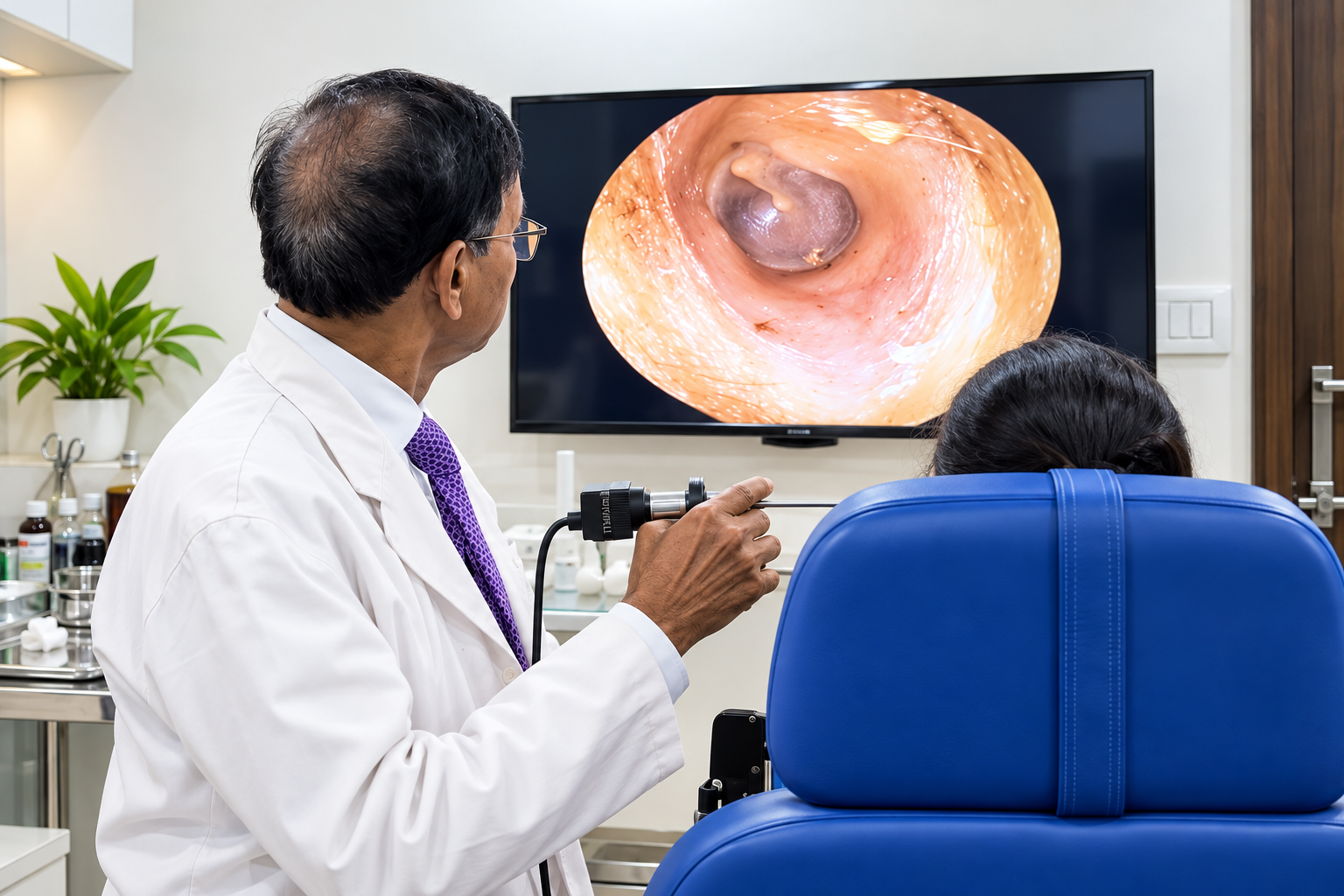
An examination of the ear canal and eardrum can help identify wax, infection or other visible causes of hearing symptoms.
When Should You Consider a Hearing Test?
If hearing changes are affecting communication, work, school or daily life, arrange an assessment with an appropriate healthcare professional.
Book an Appointment →Common Signs to Look Out For
- Frequently asking people to repeat themselves.
- Difficulty following conversations in crowded places.
- Turning the television or phone volume unusually high.
- Ringing, buzzing or other noises in the ears.
- A blocked-ear feeling or persistent ear discomfort.
- Concerns about a child's response to sounds or speech development.
Sudden hearing loss, especially in one ear, needs urgent medical assessment. Do not delay care while waiting for a routine appointment.
What to Expect During a Hearing Assessment
Your clinician will explain the recommended assessment and discuss the findings with you.
Discuss Your Symptoms
Share when the hearing difficulty began, whether one or both ears are affected, and any relevant ear problems or medical history.
Ear Examination and Testing
The clinician examines your ears and recommends appropriate hearing tests based on your needs.
Review the Results
Your results are reviewed to explain the findings and discuss whether treatment, further evaluation or hearing support is needed.
Hearing Test FAQs
Answers to common questions about hearing assessments.
1. Are hearing tests painful?
Most standard hearing tests are non-invasive and painless. Some tests involve wearing headphones, listening to sounds or having a small probe placed at the entrance of the ear canal.
2. How long does a hearing test take?
The duration depends on the type of test and whether more than one assessment is required. Contact the clinic for details about the test recommended for you.
3. Can children have hearing tests?
Yes. Hearing can be assessed in children using age-appropriate methods. The recommended test depends on the child's age, development and clinical needs.
4. Does a hearing test tell me why I have hearing loss?
A hearing test helps characterise hearing ability, but it may not identify the underlying cause by itself. An ENT examination and additional investigations may be needed.
5. Do I need an appointment for a hearing test?
Contact Advanced ENT Care Center to ask about appointments, test availability, preparation and the most suitable next step.
6. What should I do if my hearing suddenly changes?
Sudden hearing loss should be assessed urgently. Seek prompt medical care rather than waiting for a routine hearing test.
Concerned About Your Hearing?
Contact Advanced ENT Care Center to discuss your symptoms and ask about hearing assessment options with Dr. J. S. Ganveer.
Book an Appointment → Call 8770791547