
Vertigo Testing & Balance Assessment
Experiencing spinning sensations, dizziness, unsteadiness or balance problems? A clinical assessment can help investigate possible causes and guide the next steps in care.
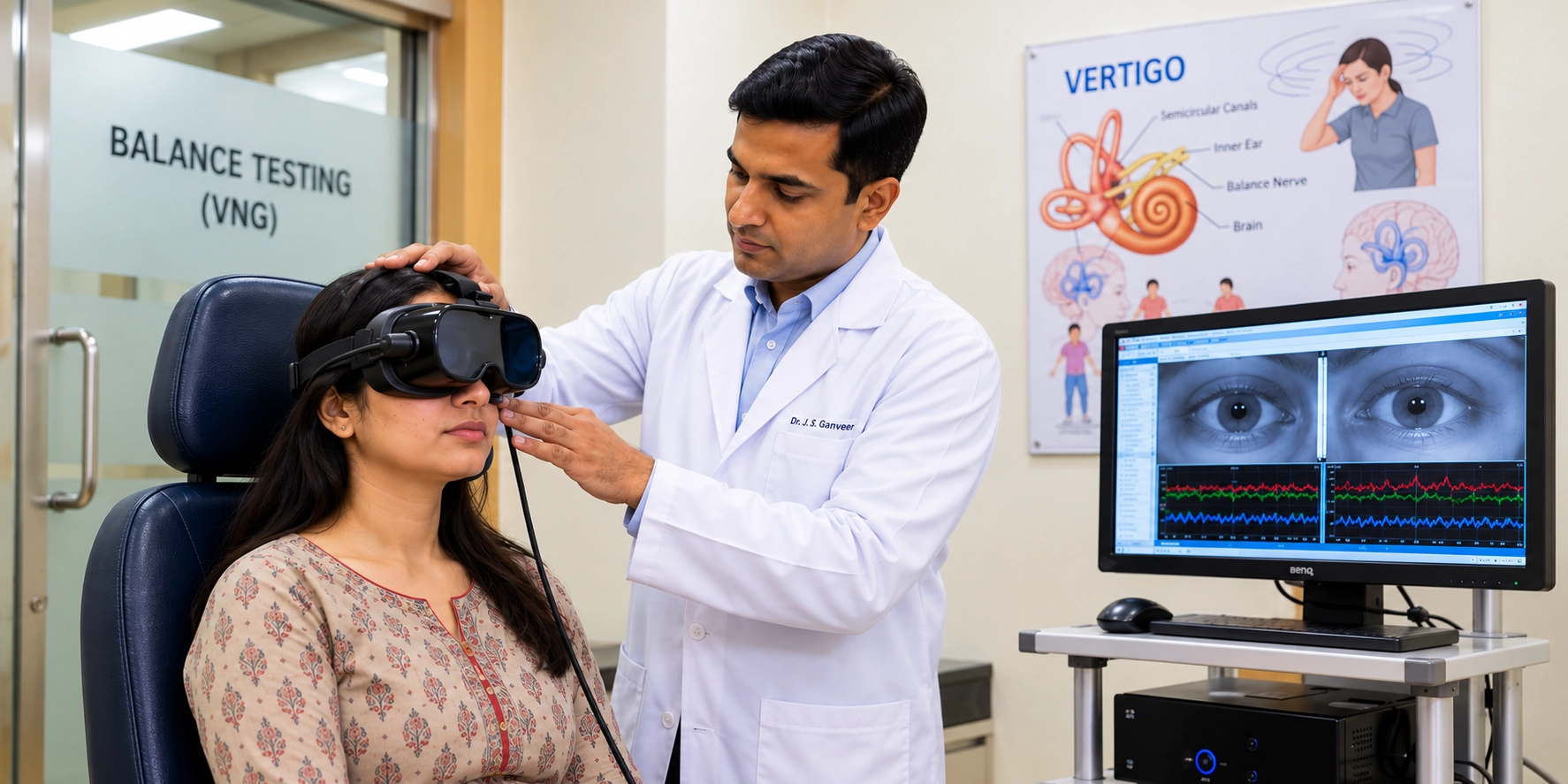
What Is Vertigo Testing?
Vertigo is a sensation that you or your surroundings are spinning. It can occur with inner-ear and balance-system conditions, although dizziness can also have other causes.
Vertigo assessment begins with your symptoms, medical history and a clinical examination. Further positional, eye-movement or balance tests may be recommended depending on the findings.
- Investigate spinning sensations or recurrent dizziness.
- Assess balance difficulties and unsteadiness.
- Explore symptoms triggered by head or position changes.
- Determine whether further testing or referral may be needed.
Common Symptoms of Vertigo
Note when symptoms start, how long they last and whether anything triggers them. This information can help your clinician assess you.

Spinning Sensation
Feeling that you or the room is spinning.
Loss of Balance
Feeling unsteady while standing or walking.
Dizziness on Movement
Dizziness when turning your head or lying down.
Ear-Related Symptoms
Hearing changes, ringing or ear fullness.
Nausea or Vomiting
Feeling sick during dizziness episodes.
Repeated Episodes
Dizziness that affects everyday activities.
Common Tests Used to Evaluate Vertigo
The right assessment depends on your symptoms and clinical findings. Not every patient needs every test.
VNG (Videonystagmography)
Records eye movements during selected tasks to help assess vestibular function.
Dix-Hallpike Test
A positional test that may help identify BPPV, a common cause of brief spinning.
Head Impulse Test
Assesses part of the reflex that helps keep vision stable while the head moves.
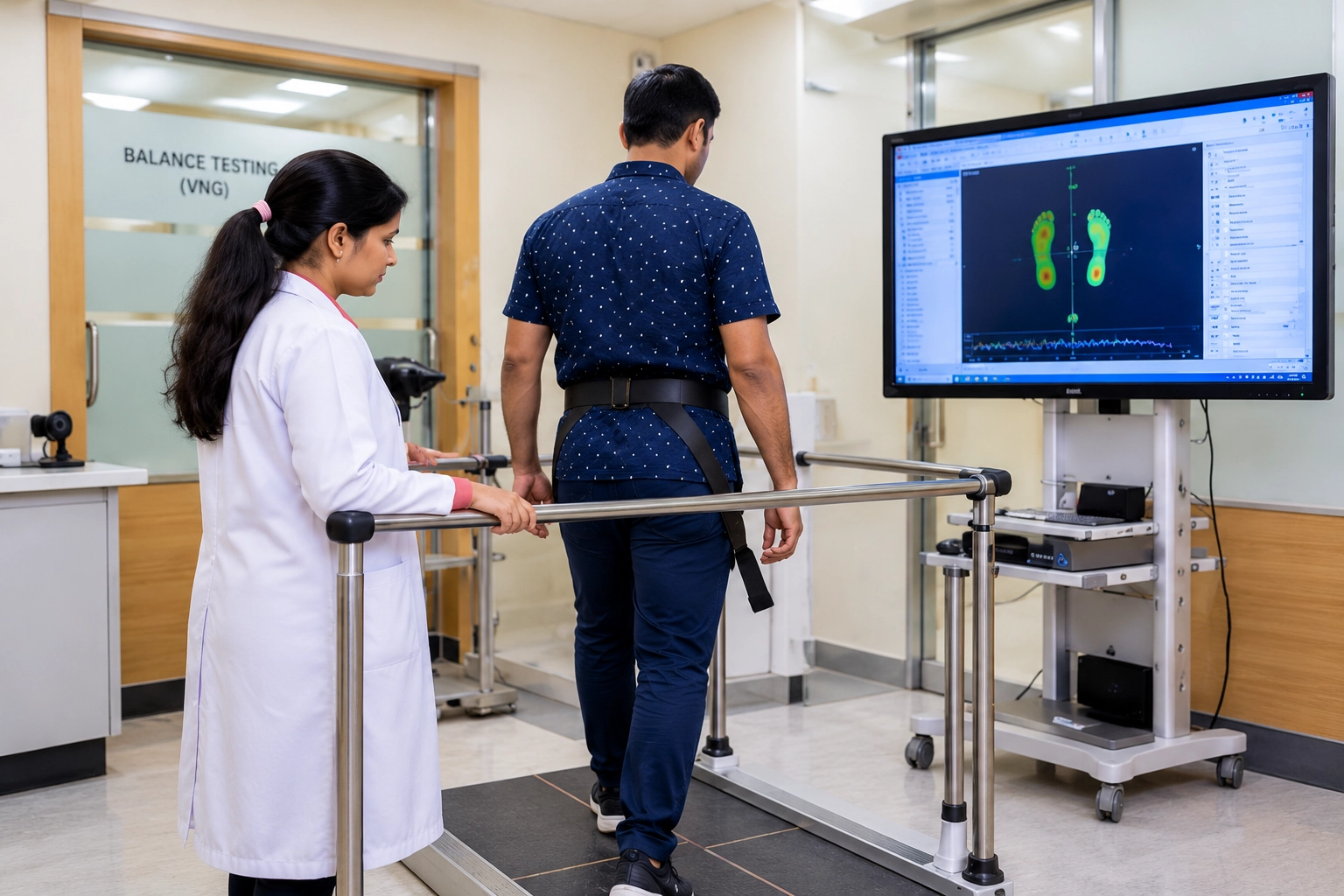
Balance & Gait Assessment
Evaluates walking, standing and stability as part of a clinical assessment.
Computerised Balance Test
Specialised equipment may help measure balance responses when indicated and available.

ENT & Hearing Evaluation
Ear examination and hearing tests may be useful when dizziness occurs with ear symptoms.
What to Expect During a Vertigo Assessment
The steps depend on your symptoms and the examination findings.
Discuss Your Symptoms
Explain when dizziness started, how long it lasts and what triggers it.
Clinical Examination
Your clinician may assess eye movements, balance, walking and ear health.
Review Next Steps
Discuss findings, treatment options and further testing or referral if needed.
Vertigo Testing FAQs
Is vertigo the same as dizziness?
Not always. Vertigo usually means a spinning sensation. Dizziness can also refer to light-headedness or imbalance.
Is vertigo testing painful?
Many clinical balance tests are non-invasive, although some positional tests may briefly trigger dizziness or nausea.
Does everyone need VNG testing?
No. Further testing depends on symptoms and examination findings. Ask the clinic whether specialised tests are available.
Can vertigo be treated?
Treatment depends on the cause. Some conditions may improve with specific repositioning manoeuvres or rehabilitation; others may need different care.
When is dizziness an emergency?
Sudden severe dizziness with weakness, trouble speaking, double vision, inability to walk or a severe unusual headache requires emergency medical care.
Experiencing Vertigo or Balance Problems?
Contact Advanced ENT Care Center to discuss your symptoms and enquire about an assessment with Dr. J. S. Ganveer.
Information on this page is for general guidance and is not a substitute for an individual medical assessment. Seek emergency care for sudden severe dizziness with neurological symptoms.